
-
Highlight
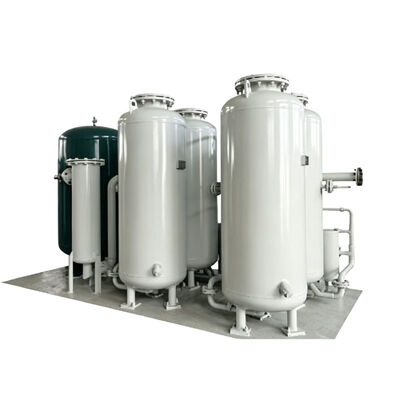
low energy VPSA oxygen generator
,vacuum adsorption oxygen production system
,YAMAHA VPSA oxygen plant spare parts
-
Oxygen Capacity1-3000Nm3/h
-
Oxygen Purity93%±3
-
Oxygen Pressure1bar
-
Oxygen Dew Point≤-40°C
-
Control Power Supply380V 50Hz
-
Place of OriginCHINA
-
Brand NameCNSMT
-
CertificationCE- adsorption oxygen
-
Model NumberHN-4060
-
Minimum Order Quantity1 set of machine or mixed order is also acceptable Transport: By Bulk or Containers
-
PriceNegotiable
-
Packaging DetailsStandard export boxes and sturdy hardwood packages are both options
-
Delivery Time1-2 Working days
-
Payment TermsL/C, D/A, D/P, T/T, Western Union,
Low energy VPSA vacuum adsorption oxygen production
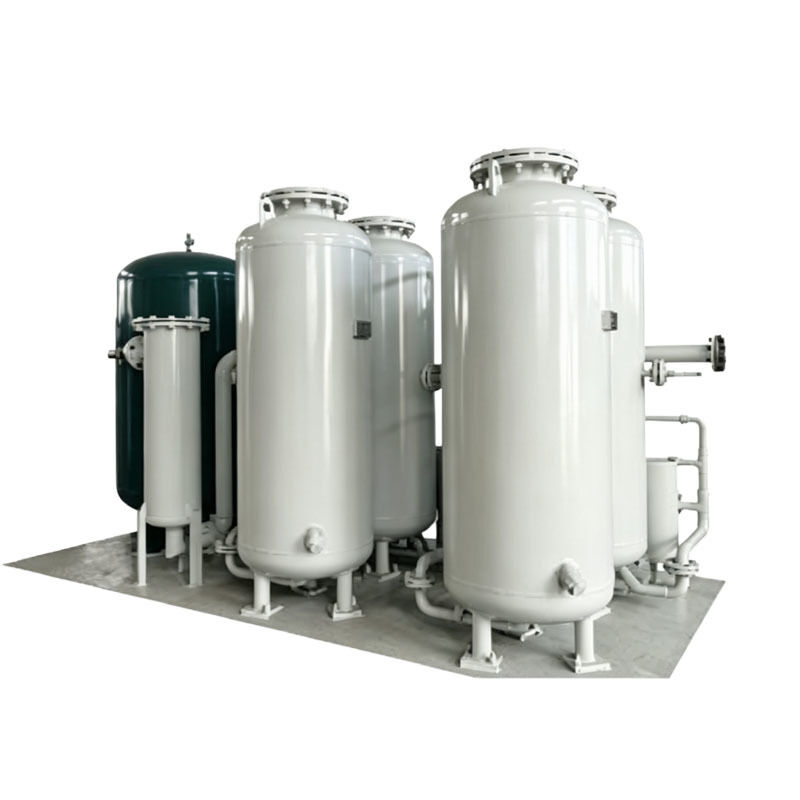
Low energy VPSA vacuum adsorption oxygen production
The main components of air are nitrogen and oxygen. At normal temperature, zeolite molecular sieves (ZMS) exhibit different adsorption capacities for nitrogen and oxygen (oxygen passes through while nitrogen is adsorbed), enabling oxygen separation from air through proper design. Nitrogen adsorption capability is higher than oxygen adsorption capacity. When pressurized air passes through the adsorption tank filled with ZMS, nitrogen and only a small amount of oxygen are adsorbed, while most oxygen flows out of the tank, producing oxygen by separating nitrogen and oxygen.
When ZMS becomes saturated with nitrogen, the air supply stops and tank pressure is reduced, allowing nitrogen to be released from the ZMS, thus regenerating the molecular sieves for reuse. Two or more absorption tanks operating alternately enable continuous oxygen gas production.
This process requires a dedicated PD blower to compress the air stream for continuous operation and a dedicated vacuum blower for absorber regeneration. The VPSA process is more energy efficient due to its inherent continuous operation, making this technology ideal for large-scale, high-volume, low-pressure oxygen requirements.

Technical Specifications
| Model | Output | Oxygen Purity | Dimensions (L*W*H mm) | Air Inlet | Gas Outlet | Weight (kg) | Power Supply |
|---|---|---|---|---|---|---|---|
| HN4010 | 10Nm³/h | ≥99.99% | 1300*950*1850 | G1/2" | G1/2" | 500 | AC220V/0.2KW |
| HN4020 | 20Nm³/h | ≥99.99% | 1400*950*1850 | G1" | G1/2" | 600 | AC220V/0.2KW |
| HN4030 | 30Nm³/h | ≥99.99% | 1500*950*1850 | G1" | G1/2" | 700 | AC220V/0.2KW |
| HN4040 | 40Nm³/h | ≥99.99% | 1600*1000*2000 | G1" | G1/2" | 800 | AC220V/0.2KW |
| HN4050 | 50Nm³/h | ≥99.99% | 1600*1200*2200 | G1" | G1/4" | 1000 | AC220V/0.2KW |
| HN4060 | 60Nm³/h | ≥99.99% | 1600*1200*2200 | G1" | G1" | 1200 | AC220V/0.2KW |
| HN4080 | 80Nm³/h | ≥99.99% | 1800*1400*2500 | G1" | G1" | 1600 | AC220V/0.2KW |
| HN4100 | 100Nm³/h | ≥99.99% | 2000*1600*2600 | DN32 | G1" | 1800 | AC220V/0.2KW |
| HN4150 | 150Nm³/h | ≥99.99% | 2200*1600*2700 | DN40 | G1" | 2400 | AC220V/0.2KW |
| HN4200 | 200Nm³/h | ≥99.99% | 2300*1600*2700 | DN50 | DN40 | 3000 | AC220V/0.2KW |
| HN4250 | 250Nm³/h | ≥99.99% | 2400*1600*2700 | DN50 | DN40 | 4000 | AC220V/0.2KW |
| HN4300 | 300Nm³/h | ≥99.99% | 2500*1600*2760 | DN65 | DN40 | 5600 | AC220V/0.2KW |
| HN4400 | 400Nm³/h | ≥99.99% | 2700*1800*2900 | DN65 | DN50 | 6500 | AC220V/0.2KW |
| HN4500 | 500Nm³/h | ≥99.99% | 3200*2400*3900 | DN80 | DN65 | 7500 | AC220V/0.2KW |
| HN4600 | 600Nm³/h | ≥99.99% | 3500*2500*4000 | DN80 | DN65 | 8500 | AC220V/0.2KW |
| HN4700 | 700Nm³/h | ≥99.99% | 3500*2500*4500 | DN100 | DN80 | 9500 | AC220V/0.2KW |
| HN4800 | 800Nm³/h | ≥99.99% | 3800*2600*4500 | DN100 | DN80 | 11000 | AC220V/0.2KW |
| HN4900 | 900Nm³/h | ≥99.99% | 3800*2600*5200 | DN100 | DN80 | 12000 | AC220V/0.2KW |
| HN41000 | 1000Nm³/h | ≥99.99% | 4000*2800*5500 | DN100 | DN80 | 15000 | AC220V/0.2KW |
Product Overview
VPSA (Vacuum Pressure Swing Adsorption) oxygen production equipment is a complete gas separation system that uses air as raw material to separate and produce oxygen through vacuum pressure swing adsorption technology. As an upgraded branch of pressure swing adsorption (PSA) oxygen production technology, this method originated from the air separation industry in the early 20th century. After decades of technological iteration, China's first industrial VPSA oxygen production equipment was put into use and has now developed into a mature industrial oxygen production solution widely applied in metallurgy, chemical industry, environmental protection, glass manufacturing, medical healthcare, aquaculture, and other fields, meeting oxygen supply needs across various industrial scales and special scenarios.
Core Working Principle
- Raw material pretreatment: External air is first filtered to remove dust and impurities, then pressurized to the required process pressure by a Roots blower, cooled by a cooler, and sent to the adsorption tower.
- Adsorption separation: The adsorption tower employs a double-layer bed structure design, with the lower layer filled with activated alumina to remove moisture and carbon dioxide from the raw air, protecting the upper molecular sieve. The upper layer contains high-performance lithium-based molecular sieves that selectively adsorb nitrogen and residual impurities. Oxygen is enriched at the top of the tower and transported to the oxygen balance tank for storage and output.
- Vacuum desorption regeneration: When molecular sieves in the adsorption tower reach saturation, the system switches working states through a switching valve, and the saturated adsorption tower is vacuumed by a vacuum pump. Impurities such as nitrogen, water, and carbon dioxide are extracted and discharged into the atmosphere, restoring the molecular sieve's adsorption capacity.
- Circulating continuous oxygen production: The equipment features two or more adsorption towers with valve switching automatically controlled by the control system to alternately complete the complete cycle of "adsorption-desorption-stamping," achieving all-weather continuous and stable oxygen supply.
Product Technical Advantages
- Lower energy consumption and operating costs: VPSA technology operates at low pressure and utilizes efficient lithium-based molecular sieves and power systems, achieving industry-leading comprehensive power consumption. Compared to traditional cryogenic air separation processes, it saves 20%-30% energy, with some scenarios achieving over 40% energy savings. Larger equipment scales yield lower unit energy consumption, demonstrating outstanding economies of scale.
- Simple process flow and flexible startup: The entire process operates at room temperature without complex low-temperature equipment and insulation systems, resulting in shorter construction periods. The device starts quickly, reaching rated oxygen production within tens of minutes. Load adjustment is flexible, allowing oxygen production to be adjusted according to demand, adapting to fluctuating requirements across different production scenarios.
- High automation and low maintenance costs: Utilizes fully automatic control systems enabling unmanned operation, reducing manual input. Core dynamic equipment includes oil-free volumetric blowers and vacuum pumps with simple structures, easy maintenance, and significantly lower maintenance costs than traditional oxygen production processes.
- Flexible scale and adjustable purity: Wide product coverage with flexible customization from small to large-scale oxygen production. Oxygen purity can be adjusted within the 30%-95% range according to demand, meeting differentiated purity requirements across various industries.
- High safety and environmental friendliness: The entire oxygen production process involves physical separation without high-pressure or high-temperature chemical reactions, no toxic or harmful material emissions, ensuring safe and stable operation while meeting modern industrial environmental requirements.
Application Fields
- Metallurgical and steel industry: Used for oxygen-enriched ironmaking and converter steelmaking with oxygen-enriched combustion assistance, improving smelting efficiency, reducing energy consumption, and decreasing pollutant emissions. Multiple large-scale VPSA oxygen production units have been stably applied in domestic production scenarios.
- Glass and cement manufacturing: Oxygen-enriched combustion increases combustion temperature, reduces fuel consumption, decreases smoke emissions, and improves product yield and production efficiency.
- Environmental water treatment: Used for biochemical aeration in sewage treatment. Compared to traditional aeration methods, it improves water treatment efficiency and reduces operating costs. Also applicable to oxygen-enriched incineration processes for waste incineration.
- Chemical industry and aquaculture: Provides process oxygen for chemical production and enables high-density aquaculture water oxygenation to increase aquaculture yield.
- Vehicle and medical healthcare: With mass production of automotive-grade VPSA oxygen production technology, applied to high-end vehicle oxygen production systems supporting dispersed whole-vehicle oxygen enrichment and nasal suction high-concentration oxygen supply, meeting high-altitude travel and healthcare needs, and suitable for small to medium-sized medical oxygen production.
Frequently Asked Questions
What is the difference between VPSA and regular PSA oxygen concentrators?
VPSA adopts vacuum desorption process, which does not require high-pressure gas source, has lower energy consumption and larger gas production, and focuses on large-scale industrial oxygen supply.
Can the device run continuously throughout the day?
Supports 24-hour uninterrupted operation, high degree of automation, and can achieve unmanned operation.
Can the purity of oxygen be adjusted?
Oxygen purity, flow rate, and output pressure can be flexibly adjusted within the rated range to meet different gas requirements.
What is the service life of molecular sieves?
Vacuum regeneration is more thorough, molecular sieve performance deteriorates slowly, and has a longer service life under normal operating conditions.
Is daily maintenance complicated?
Easy maintenance, only requiring regular inspection of the filter element, fan, vacuum pump, and pipeline sealing, with low maintenance costs.
What are the reasons for the decrease in gas volume and purity?
Often caused by filter blockage, pipeline leakage, abnormal vacuum system, or excessive intake impurities.
What are the suitable usage scenarios?
Specializing in high flow conditions, suitable for industries such as metallurgy, glass, chemical, desulfurization and denitrification, and large-scale wastewater treatment.
Are there any requirements for the installation environment?
Needs to be placed in a well ventilated and flat area, with reserved maintenance space and away from flammable and explosive materials.
Customer feedback and after-sales communication
Customers are satisfied with VPSA oxygen generator for stable oxygen output and low energy consumption. Quick after-sales support covers installation and troubleshooting. Great quality and service win good reviews and repeat orders.
Certification
Our philosophy is that the needs of our customers are the goals we need to surpass. We have always maintained good cooperative relationships with our customers and constantly introduced new customers to us, which reflects our successful after-sales service. In terms of quality and service, we are steadfastly taking action!
CNSMT specializes in producing VPAS vacuum adsorption oxygen production equipment. VPAS vacuum adsorption oxygen production equipment has mature technology, stable operation, high oxygen production efficiency, low energy consumption, and is suitable for various industrial scenarios. The product has excellent quality and is sold both domestically and internationally, receiving high praise from customers. Vacuum adsorption oxygen production equipment is priced affordably and has excellent cost-effectiveness, effectively saving costs for enterprises. We have comprehensive after-sales service, providing installation and debugging, technical support, and fault repair, with timely response. With high-quality products and attentive service, we sincerely invite customers to consult and purchase.
Contact Information
Phone: +8613537875415
Email: Lizzy@smtlinemachine.com
Address: Xintian Industrial Area, Baoan, Shenzhen City, China
Related Products
Our products are sold all over the world, you can rest assured.